
The Resonant Night: Understanding Sleep Through the Lens of Sound and Vibration
An in-depth exploration of how intentional sound practices can support the body's natural sleep architecture, drawing on both scientific research and contemplative wisdom.
Sleep is perhaps the most profound altered state we enter regularly. Each night, consciousness withdraws from the external world, the brain reorganizes itself, and the body undertakes essential maintenance that cannot happen during waking hours. Sleep is not merely rest—it is active restoration, memory consolidation, emotional processing, and immune regulation.
Yet for many, sleep has become elusive. The hyperconnected modern world, with its constant stimulation and ambient stress, often leaves the nervous system too activated to surrender to rest. This is where sound can serve as a bridge—not forcing sleep, but inviting the conditions that allow sleep to arise naturally.
The Architecture of Sleep
Understanding how sound can support sleep begins with understanding sleep itself.
Sleep unfolds in cycles of approximately 90 minutes, moving through distinct stages:
Stage 1 (N1): The threshold between waking and sleeping. Brain waves slow from beta (12–30 Hz) to alpha (8–12 Hz) and then to theta (4–8 Hz). The body begins to relax, but sleep is easily disrupted.
Stage 2 (N2): Light sleep deepens. Brain activity shows distinctive patterns called sleep spindles and K-complexes, which appear to play a role in memory consolidation and protecting sleep from disruption.
Stage 3 (N3): Deep sleep, characterized by slow delta waves (0.5–4 Hz). This is when physical restoration primarily occurs. Growth hormone is released, tissues repair, and the immune system strengthens.
REM Sleep: Brain activity increases to near-waking levels, but the body is essentially paralyzed. Dreams occur. Emotional memories are processed and integrated.
Throughout the night, we cycle through these stages, with deep sleep predominating in the first half of the night and REM sleep increasing toward morning.
How Sound Influences Sleep Physiology
Sound affects sleep through multiple mechanisms:
Autonomic Downregulation
The transition from waking to sleep requires a shift from sympathetic dominance (the "fight or flight" system) to parasympathetic dominance (the "rest and digest" system). This shift is marked by decreased heart rate, lowered blood pressure, reduced muscle tension, and slowed respiration.
Gentle, predictable sound can support this autonomic downshift. Research has shown that slow-tempo music (around 60–80 BPM) can reduce heart rate and cortisol levels, preparing the body for sleep. The key is predictability—the nervous system relaxes when it can anticipate what comes next.
Brainwave Entrainment
As mentioned, sleep stages are characterized by different brainwave frequencies. External auditory stimulation can, to some degree, encourage the brain toward particular frequency states.
Studies on "pink noise" (a frequency distribution similar to natural sounds like rainfall) have shown that it can enhance deep sleep and improve memory consolidation. The mechanism appears to involve the brain synchronizing its slow-wave activity with the rhythm of the sound.
However, it's important to note that this is not a simple cause-and-effect relationship. The brain is not a passive receiver; it actively interprets and responds to sound based on context, meaning, and current state.
Masking Disruptive Stimuli
One practical function of sleep sound is acoustic masking—using consistent, neutral sound to cover unpredictable environmental noises that might otherwise cause awakening. This is why white noise machines can be effective in noisy environments.
But masking is not the same as healing. The most profound sleep-supportive sound work goes beyond covering noise to actively inviting relaxation and regulation.
The Contemplative Perspective: Sleep as Surrender
While science illuminates the mechanisms of sleep, contemplative traditions remind us that sleep is ultimately an act of surrender—a nightly letting go of control, identity, and the illusion of separation.
In many wisdom traditions, sleep and death are seen as related states. The Tibetan Buddhist practice of sleep yoga, for example, uses the threshold of sleep as an opportunity for spiritual practice, working with consciousness as it transitions from waking awareness.
From this perspective, difficulty sleeping is not merely a physiological problem to be fixed but may reflect a deeper resistance to letting go—a holding on that extends beyond the bedroom into our relationship with impermanence itself.
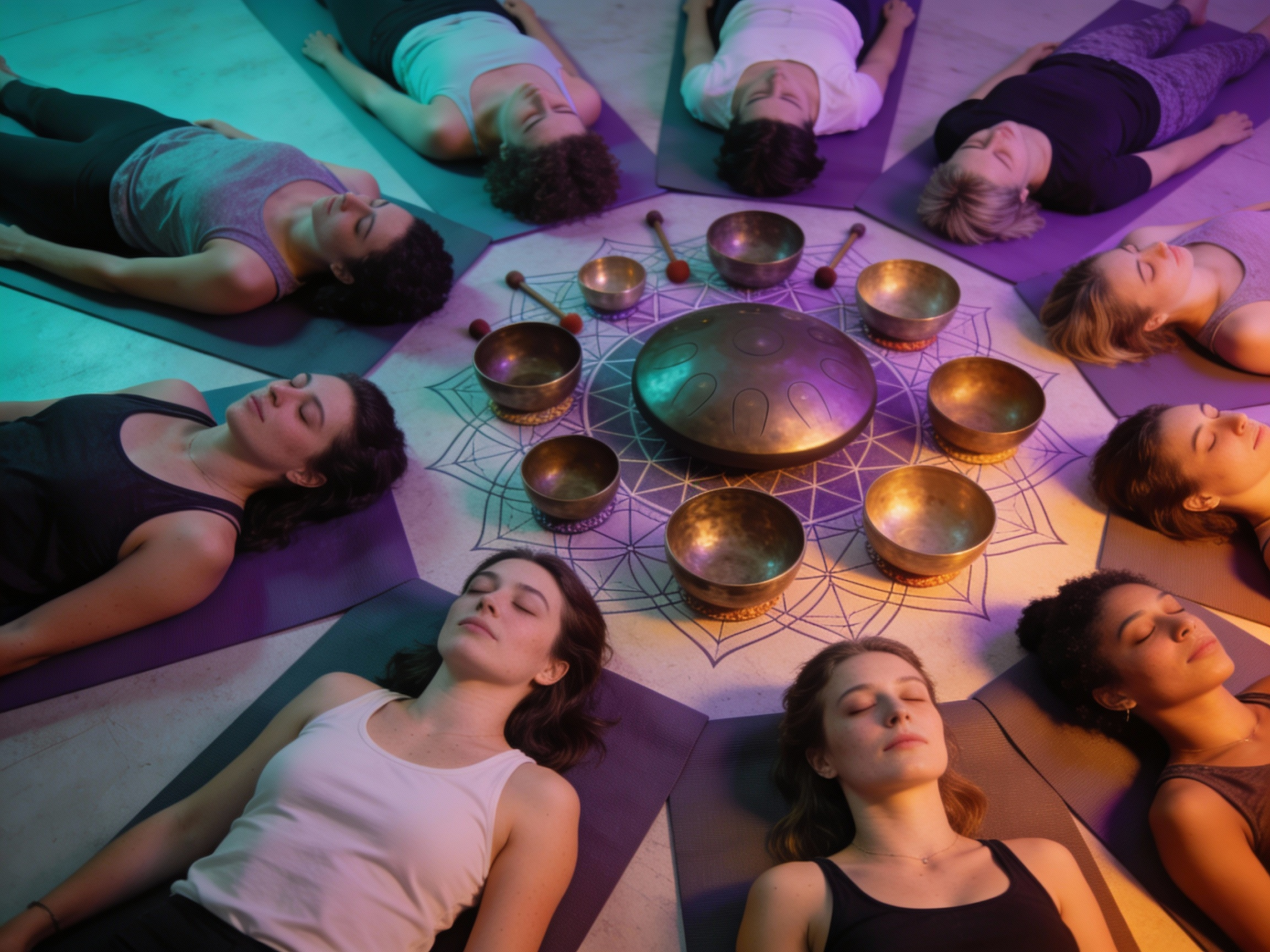
Sound can support this surrender not by forcing relaxation but by creating a container of safety within which the psyche feels permission to release. The steady tone of a singing bowl is both a physical vibration affecting the nervous system and a symbolic presence—a reminder that we are held, that something continues even as we dissolve into sleep.
A Sound-Based Sleep Protocol
This protocol is designed to support natural sleep without creating dependency on sound. The goal is to train the nervous system to relax, not to require external stimulation indefinitely.
Pre-Sleep Transition (30–60 minutes before bed)
Environmental Preparation:
- Dim lights to support natural melatonin production
- Lower ambient temperature (65–68°F / 18–20°C is optimal for most people)
- Minimize screen exposure, or use warm-spectrum filters
- Create a sense of closure for the day—perhaps through journaling, gentle stretching, or a brief review
Auditory Environment: Begin with ambient music or nature sounds that feel calming but not engaging. The goal is background sound that softens the transition, not sound that captures attention.
Active Sound Practice (15–20 minutes)
This phase uses sound intentionally to shift the nervous system toward sleep-readiness.
Breath Regulation: Begin with 3–5 minutes of slow breathing, emphasizing extended exhales. A ratio of 4 counts inhale to 6–8 counts exhale is ideal for most people. This breathing pattern activates the vagal brake and begins the parasympathetic shift.
Tonal Immersion: Introduce a sustained, low-pitched sound. Options include:
- A recording of singing bowls or drones tuned to low frequencies
- A live singing bowl if you have one (C or F below middle C are particularly grounding)
- Self-generated humming on a comfortable low pitch
Let the sound be continuous and uneventful. The nervous system is soothed by predictability. If using live instruments, play with regular, unhurried pacing.
Body Scan with Sound: As you listen, gently scan your body from feet to head. Notice areas of tension. Imagine the sound waves washing through these areas, softening what is held. This is not forced visualization but gentle attention, allowing the vibration to meet the body.
Transition to Silence (5 minutes)
Gradually reduce the volume of sound, allowing it to fade toward silence. If using your voice, let hums become softer and less frequent until they stop naturally.
Rest in the silence that follows. Notice the internal resonance—the way the body continues to vibrate subtly even after external sound ceases.
Sleep Onset
From this point, either allow sleep to arise naturally or, if helpful, continue with very quiet background sound. Pink noise, nature sounds, or extremely low-volume drones can support continued relaxation without engaging attention.
If sleep does not come within 20 minutes, avoid frustration. Get up, do something quiet in dim light, and return when drowsiness arises. Fighting wakefulness only increases arousal.
Addressing Common Sleep Challenges
Racing Mind: If mental chatter persists, focus attention on the physical sensation of sound in the body rather than trying to stop thoughts. The body can relax even when the mind is active, and bodily relaxation often eventually calms mental activity.
Anxiety About Sleep: Performance anxiety about sleep creates the very arousal that prevents it. Sound practice can help by providing a focus other than sleep itself. The goal becomes relaxation, not sleep. Paradoxically, letting go of the demand to sleep often allows it to arise.
Chronic Insomnia: If sleep difficulties are persistent and significantly impact daytime function, consider working with a healthcare provider. Sound practices can complement but should not replace appropriate medical evaluation and treatment.
Sensitivity to Sound: Some nervous systems find sound stimulating rather than calming at night. If this is true for you, emphasize the breath-based and silence-based aspects of the practice, or experiment with very subtle sounds (your own humming at barely audible volume, or very quiet nature recordings).
The Deeper Rest
Beyond the pragmatic goal of falling asleep, sound practice offers an invitation to a different relationship with rest itself.
In our productivity-oriented culture, sleep is often viewed instrumentally—as the fuel that allows us to work more. We optimize sleep like we optimize performance metrics, seeking efficiency even in surrender.
But sleep is also an end in itself. It is nightly practice in non-doing, in trusting that things continue without our vigilant control. Each night, we rehearse the ultimate letting go.
Sound practice before sleep can be a ritual acknowledgment of this truth. The singing bowl's tone rises and fades; we too will rise and fade. In learning to rest deeply in the resonance of the present moment, we prepare not only for tonight's sleep but for all the transitions that make up a life.
Integration
The best sleep practices are those that feel natural and sustainable. Experiment with the elements above, keeping what serves you and releasing what doesn't. Trust your body's intelligence—it knows how to sleep. Our work is simply to create the conditions in which this natural capacity can express itself.
May you rest deeply, dream well, and wake renewed.